
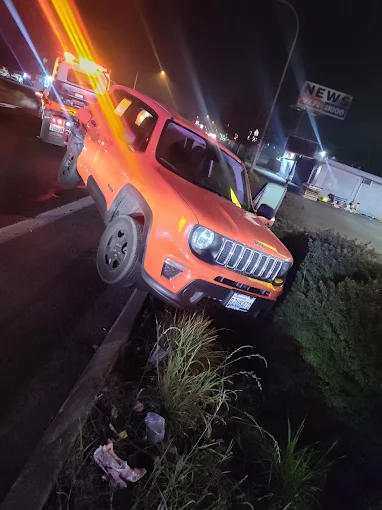
Slid into a ditch?
Call and tell us what you see — we'll send the right truck to get you out.
Decide If You Need a Winch-Out or a Standard Tow
If your car slid off the road but looks and feels fine, a winch-out may be all you need, and you can likely drive away after. If anything is bent, leaking, flat, or won’t start, plan on a tow after the pull-out. When you’re not sure, tell us what you see, and we’ll help you sort it out on the phone.
Being stuck doesn’t always mean being broken. The car you’re standing next to might only need a pull back onto solid ground. Or it might need a ride to a repair shop. Knowing which one helps you ask for the right help.
A winch-out pulls your car out of a ditch, mud, snow, or a soft shoulder and sets it back where you can drive. A standard tow takes your car somewhere else because it shouldn’t be driven. Sometimes you’ll need both.
A winch-out is often enough when:
- You slid off slowly, like on a wet curve or an icy driveway, and didn’t hit anything hard.
- All four tires still hold air and look normal.
- The car started fine and was running before it got stuck.
- You don’t see fluid dripping, and no new warning lights came on.
- The car is sitting upright, not tipped on its side or roof.
Plan on a tow after the pull-out when:
- A wheel looks bent, tilted, or pushed back in the wheel well.
- You hit a culvert, rock, post, or deep edge on the way in.
- There’s a puddle of oil, coolant, or fuel under the car.
- An airbag went off.
- The car won’t start, or it made grinding or scraping noises when you tried to move.
- The steering felt wrong right before or after you went off the road.
Here’s a common picture. You took a turn a little fast on a rainy night, and your front tire dropped off the edge. The car’s leaning, but it’s not hurt. That’s usually a pull-out. You might be home in time for dinner.
Now picture the same slide, but you heard a loud bang and the steering wheel sits crooked. Even if we get the car back on the road, driving it could make things worse or put you at risk. That car should go to a shop on a truck. Our Flatbed Towing service is one way to get it there.
Some damage hides underneath. A car can look fine from the driver’s seat and still have a damaged tie rod or a cracked oil pan from a rough landing. That’s why it’s smart to look at the car again once it’s on flat ground before you drive any real distance.
If you can’t tell, that’s okay. You don’t need to be a mechanic to call. Just tell us what happened, what the car looks like right now, and what you notice. Is it leaning? Leaking? Did it start? Those details help us send the right help the first time. Then you’re not waiting on a second truck.
If it turns out you only need a pull, our Winch Out Service covers that. If the car needs to go somewhere, we can handle the tow too. Either way, you’ll know what you’re dealing with before anyone hooks up.
Know When a Ditch Recovery Is a Hazard That Needs Immediate Action
Most ditch slides are a hassle, not an emergency. The car’s stuck, your day’s thrown off, and you need a hand. That’s it.
A few situations change the order of things, though. When someone’s safety is at risk, people come first and the car comes second. Here’s how to tell which kind of day you’re having.
Call 911 first if any of these are true:
- Anyone is hurt, even if it seems minor right now.
- You smell fuel or see smoke coming from the car.
- The car is on its side or on its roof.
- The car is in water, or water is rising around it.
- A power line is down on or near the car.
- Part of the car is sticking into a travel lane and other drivers can’t see it well.
Once emergency crews are on the way or on scene, give us a call. The car usually needs to be moved once everyone’s safe, and that’s where we come in. If the car rolled, our Roll Over Recovery service handles that. If there was a crash involved, Accident Recovery Towing is the right fit.
Some situations aren’t a 911 call but still shouldn’t wait until morning. Pierce County’s wet months can turn a shoulder soft fast, and a car resting on the edge of a ditch can keep sinking or shifting as the ground gets wetter. A car sitting near a dark curve or a busy road like Mountain Highway is a risk to other drivers too. In those cases, call us right away instead of hoping it’ll hold.
While you wait, a few things help keep you safe:
- Don’t keep spinning the tires to get out. That often digs the car in deeper and can make it slide further.
- If the car is leaning, don’t stand on the low side of it or between the car and the ditch.
- If it’s safe to get out, wait well off the road, away from passing traffic.
- Turn on your hazard lights so other drivers can see the car.
When you call us, a few quick details help us send the right help the first time. Tell us where you are, like a cross street or a landmark. Let us know if anyone’s hurt, what the car looks like right now, and whether any part of it is in the road. If you’re on a narrow rural road or at the bottom of a steep bank, mention that too.
You don’t have to figure out every detail on your own. If you’re not sure whether it’s urgent, treat it like it is and call. We’d much rather come out to a car that turned out fine than have you waiting next to one that wasn’t.
Emerald Towing has been helping drivers since 1998, and we’re here 24/7. Stuck in a ditch in Spanaway or nearby? Reach out and we’ll talk you through it.
Car on the edge of a ditch?
Don't wait for it to sink further — call now.
Skip the Pull-Out When Your Car Can Self-Recover
Not every stuck car needs a truck. Sometimes the honest answer is that you can get yourself out, or you can just wait a bit. We’d rather tell you that than send someone out for nothing.
Here’s how to tell when a pull-out probably isn’t needed.
You can often get out on your own when:
- Only one tire is in soft ground, and the other three sit on pavement or firm gravel.
- The car is level, or close to it, and isn’t leaning toward a ditch.
- The tire is barely sunk in, maybe an inch or two, not buried to the rim.
- You’re on your own driveway, a parking lot, or a flat yard, not on the edge of a bank.
- Nothing is damaged, and the car starts and runs like normal.
In those cases, the car mostly needs a little grip. Some folks have luck with simple fixes. They straighten the front wheels, ease off the gas, and give the tire something to bite into, like a floor mat, a board, or some gravel. A friend giving a gentle push from a safe spot can help too.
Go slow. If the tire just spins, stop. As we mentioned above, spinning digs you in deeper. One or two easy tries is plenty. If it doesn’t move, you’ve learned something, and calling is the next step.
Waiting can be the right call too.
Say you slid into a snowbank at the end of your driveway and you’re not in anyone’s way. If it’s safe and you don’t have to be anywhere, letting the sun soften things up for a few hours might do the job for free. The same goes for a car parked on a soggy lawn. If it’s not sinking, not in the road, and not blocking anyone, it can sit until the ground firms up.
There’s one thing we’d steer you away from. That’s hooking a rope or chain to a buddy’s truck and yanking. It seems easy. But if it’s tied to the wrong spot, it can rip off a bumper or bend parts underneath. A rope that snaps can also whip back hard. If it takes more than a push and some traction, that’s the point where a proper winch-out makes sense.
Self-recovery is a bad idea when:
- The car is tipped toward a ditch or drop-off, even a little.
- Two or more tires are off the hard surface.
- The car is sitting near traffic, a curve, or a road edge where you’d be standing in harm’s way.
- It’s dark, and you can’t see how deep or steep the ground is.
- You’d have to get under the car or stand on the low side of it to try anything.
A car that’s leaning can shift when you try to move it. Getting yourself hurt over a stuck car isn’t worth it.
So here’s the simple version. If it’s level, barely stuck, and you’re somewhere safe, give it a careful try or give it some time. If it’s leaning, deep, near the road, or you just don’t feel good about it, that’s what we’re here for. Calling for help doesn’t mean you gave up. It means you’re being smart about it.
What Happens During a Professional Ditch Recovery
If you’ve never watched a car get pulled out of a ditch, it can feel like a mystery. It’s pretty simple, and a good recovery is slow, careful, and kind of boring to watch. That’s how you want it.
Here’s what a professional pull-out usually looks like, step by step.
First comes a look around. Before anything gets hooked up, the operator walks the scene. They check the ground conditions, how soft or steep it is, and what’s behind and under the car. They also watch for traffic, because the truck often has to park close to the road to reach you.
This part matters more than people think. A car in shallow mud on a flat shoulder needs a different plan than one tipped at the bottom of a wet bank. A few minutes spent looking can save your bumper, your suspension, and everyone’s safety.
Next, the truck gets set. The operator parks on solid ground, lined up so the pull goes the way the car needs to move. Warning lights go on so passing drivers know to slow down. On narrow rural roads, the truck may need to sit at an angle or a little way off, and that’s normal.
Then the car gets hooked up the right way. This is where a pro makes the biggest difference. The cable or strap attaches to solid parts of the car’s frame or its built-in tow points, not the plastic bumper cover. If the car needs to come out at an angle, the operator may use a pulley to change the direction of the pull so the car doesn’t get dragged sideways.
The pull itself is slow and steady. There’s no yanking and no sudden jerks. The car gets eased up and out a little at a time, and the operator stops to check things along the way. If you’re asked to sit in the car and steer, they’ll tell you exactly when and how. Otherwise, you’ll be asked to stand well back.
Once the car is back on firm, flat ground, everyone takes a look. That’s the moment to walk around it, check the tires, look underneath for drips, and start it up. If everything seems right, you can usually drive off. If something looks off, that’s when the tow-or-drive question from earlier comes back, and you won’t need a second call to sort it out.
While all this happens, here’s your part:
- Have your keys handy so the car can be put in neutral if needed.
- Mention anything you noticed on the way in, like a bang, a scrape, or a warning light.
- Point out any aftermarket parts, low skirts, or a trailer hitch that might be in the way.
- Stay where the operator asks you to stand, and keep kids and pets in a safe spot.
Most pull-outs don’t take long once the truck is set. Deep mud, a steep bank, or a car stuck far from the road can add time, because the setup takes more care. A good operator will tell you what’s going on as they work, so you’re never left guessing.
That’s what we believe in at Emerald Towing: clear communication and real care for your vehicle from start to finish. You should know what’s happening to your car and why, every step of the way.
Match the Recovery Equipment to Your Vehicle’s Weight Class
A compact car in a ditch and a loaded box truck in a ditch aren’t the same job. The bigger and heavier the vehicle, the more pulling power it takes to bring it out safely. That’s why the first thing we’ll ask about is what you’re driving.
Getting this right matters for a simple reason. If a truck that’s too small shows up, it can’t do the pull safely. It might slide toward the ditch itself, or it might not move your vehicle at all. Then you’re waiting on a second truck, and that’s the last thing you want on a cold, wet shoulder.
Here’s a plain-language look at how vehicles usually sort out by size:
- Light duty: everyday cars, minivans, SUVs, and most half-ton pickups. This is what most folks are driving when they slide off a wet road.
- Medium duty: bigger work trucks, box trucks, delivery vans, and many motorhomes. These need more pull and more room to set up.
- Heavy duty: semis, dump trucks, buses, and other big rigs. These call for a much larger recovery setup and more careful planning.
Weight isn’t only about the vehicle itself. What’s on it and behind it counts too. A pickup hauling a bed full of firewood, or one with a camper or a loaded trailer hitched up, weighs a lot more than the same truck sitting empty in your driveway. A trailer can also change how the vehicle has to come out, since it may need to be unhooked or pulled as a separate step.
Mud makes all of this harder. A vehicle sunk into soft, soaked ground holds on tighter than one just resting on the edge. A heavier vehicle in deep mud can take a lot more force to free than its weight alone would suggest. That’s part of why the details you give us on the phone help so much.
When you call, try to have these handy:
- The make, model, and year, or just a simple description like “full-size pickup” or “Class A motorhome.”
- Whether it’s loaded, and roughly with what.
- Whether you’re towing a trailer, boat, or camper.
- How deep it’s sunk and how many wheels are off the hard surface.
Not sure of the exact weight? That’s fine. You can often find the weight rating on a sticker inside the driver’s door frame, but a good description works too. We’ll ask the right questions.
Our team handles light, medium, and heavy-duty towing, along with RV towing and commercial towing. So whether it’s your daily driver, a family motorhome, or a work truck from your fleet, we can match the truck to the job. If your vehicle is a big rig, our Heavy Duty Towing service covers that in more detail.
The goal is simple. One call, the right truck, and your vehicle back on solid ground without extra wear on it or extra waiting for you. Call us at 253-846-1164.